
CPA Gone Mad Issue 10: February 6, 2017
Trading…Investing…Wealth-Building…
This week I’m going to talk about timing again. You may think I need to stop harping on the timing issue, but I believe it’s that important. Especially considering how I believe the stock market is going to behave over the coming months and years.
Everything I’m going to discuss this week is my opinion. But it’s exactly how I’m planning for my retirement and what I’m doing with my money.
If you’ve read my proprietary asset allocation guide, Let Your Asset Allocation Build, some of this may be repetitive. But hearing it again will help you determine the approach you should take for retirement.
Remember, I advocate being skeptical of those giving you financial advice. It’s not that there are no trustworthy individuals or companies out there to give you financial advice. But you need to understand their financial motivation, as nobody cares as much about your money as you do.
And once you determine that they are trustworthy in their financial motivation, you also have to make sure their investment strategy aligns with your personal situation and ultimate goals.
This is why I try to be transparent. My motivation is to help you achieve financial freedom. The more that people, including my friends and family, are able to obtain financial freedom, the happier they will be, ultimately creating a more enjoyable life for me. I’m confident that my plan and my career will allow me to achieve the financial freedom I desire. So my main goal is to bring those around me closer to achieving the same goal.
Since I care more about my money than anyone else does, sharing my personal story about what I’m doing with my money allows you to understand whether my principles and goals align with yours. Our situations will never be exactly the same in terms of family, income, savings, or lifestyle, because we are all different. But most of us share a couple of things in common: time horizon (we’re similar ages) and goals (financial freedom for our families).
I’m working on a future article about why you need to begin saving more money and planning for retirement today. In it, I explain how the 401(k) was not intended to be the only means of retirement savings. And I talk about how sacrificing today may seem hard at first, but how each day it gets easier and easier.
But for now, back to understanding timing.
Wealth-Building Is All That Really Matters
I honestly have no idea how much attention you pay to the markets, how much you watch CNBC, or how much you read the Wall Street Journal. I’d love to know, though. Please send me a note at feedback@coast2coastfinancial.com and let me know how much you think about this stuff.
Why do I care? Because that feedback will help me better understand the extent to which you are at risk of getting caught up in trading or investing and losing focus on wealth-building.
If you’ve been reading my publications and have been a subscriber for a while, you may understand why I harp on this. It’s because I believe that really soon, it’s going to become very easy to get sucked into trading and investing. I also believe a financial crisis of epic proportions is on the horizon.
And I’m concerned that if you listen to the mainstream media, you’ll lose focus on wealth-building and start trading/investing for short-term gains without thinking about the long term. That’s exactly when my biggest fear could come to fruition: you get wiped out.
Trading and Investing Are Jobs
Can you make money trading? Absolutely. Can you make money investing or paying someone to invest for you? Absolutely. But these are jobs. Jobs that you do or that you pay someone else to do. And you’d better make sure that if you’re paying someone to do the job for you, their financial interests are aligned with yours.
If your full-time job is anything other than being a professional trader or investor, then trading and investing are not for you. And if your full-time job is trading and investing, I wish you well. I hope you exercise, eat healthy, meditate, practice yoga, and do everything else you can to relieve the stress that comes with that being your full-time job.
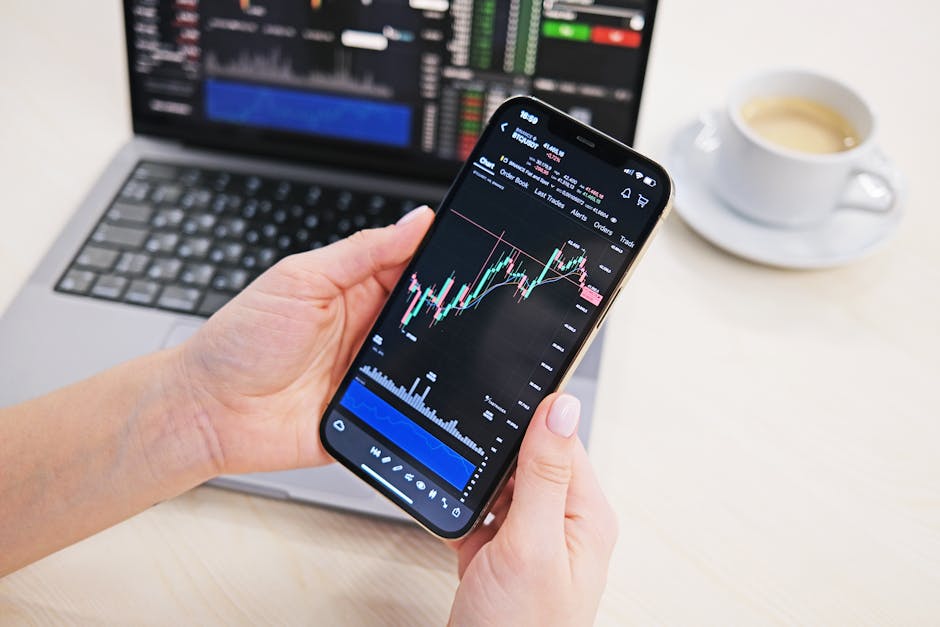
This is why CNBC and the Wall Street Journal are bad for average Americans. The focus of these outlets is trading and investing. Again, you can make a lot of money trading and investing, but unless you’re an insider, it’s like gambling.
I love Las Vegas. It’s a release for me. But I don’t go to Las Vegas expecting to win money. I go with an amount of money I expect to lose. I enjoy socializing with the dealers, talking with other players, and playing the game. I’m not trying to lose money, but I expect to lose money. The casinos were not built by everyone winning.
Do I sometimes win? Absolutely. And it’s great when I do. But I lose more often than I win. And I’m okay with that, because it’s a form of stress release for me.
But if you go to Vegas with your rent money, expecting to win, you’re in trouble.
Trading is no different. Just as with gambling, it’s possible to “win” money. But unless you’re a professional, it’s best not to get involved in either. It’s a full-time job to really be a professional trader and consistently make money at it.
The problem with trading is that toward the top of markets, it becomes easy to make money. When markets go through their euphoric rise before a crash, everyone makes money trading. People who know nothing about real long-term wealth-building, the markets, or the intrinsic value of companies begin making lots and lots of money trading.
That is, until they lose it all.
Have you ever been at a craps table when it gets “hot”? There’s nothing more fun than a hot craps table. Everyone is winning money, it’s loud, and everyone is having a blast. Then someone craps out. But everyone believes the winning will continue. Next thing you know, three or four more people crap out quickly and most of your winnings are gone.
This happens to traders all the time. They begin making lots of money toward market tops, become overconfident, and then lose it all when an “unexpected” crash happens.
Remember, I believe the market is going to go through one of these euphoric rises in the near term. Lots of money could be made trading. But if it’s not your full-time job, lots of money can be lost too.
Investing Can Build You a Solid Portfolio
So what about investing? Investing can make you money as well. You can park money in a solid stock market fund and earn great long-term returns. You can buy quality, dividend-paying companies, compound the dividends for years, and build solid income streams. You can even invest in the next Facebook or Amazon in the early stages and generate significant wealth.
But investing is impacted by timing. As I mention in my book, on average the stock market goes up over the long term. However, it doesn’t go up in a straight line. Markets get expensive and they get cheap. They go up and they go down.
If you just invest in the stock market over the long term, your returns are diminished by these ups and downs. If the market returns on average 10% over 30 years, your return will not actually be 10% per year. The ups and downs will cause your return to be much lower. Re-read chapter two of my book for a refresher.
But the biggest problem with investing is emotions. When markets are expensive, that’s when most people want to get in. And when markets are cheap, most people want to get out. On the surface it sounds silly. Who would intentionally buy something when it’s expensive and sell when it’s cheap?
Most people do, though – because of emotions. When the market is on a rise, greed leads you to want to buy, even though the market may be expensive. When the market is falling, fear leads you to want to sell, even though the market may be cheap.
So while you can make money investing, emotions tend to cause you to lose money investing, or at least not maximize your wealth-building potential.
Remove the Timing Barrier and Trading/Investing Becomes Wealth-Building
So if you shouldn’t trade and you shouldn’t invest, then what should you do? Commit to long-term wealth-building!
Long-term wealth-building does involve trading and investing, but with discipline – not emotions – and a long-term approach.
I’m trying to build long-term wealth, so every move I make is based on a long-term strategy. The market is expensive right now. But could the market go higher? Absolutely. And as you know, I believe it will.
I also believe it will crash. And when it does, I don’t want to be caught trading or investing simply to be making short-term gains. This is why I take a long-term approach.
I own stocks that I plan to hold over the long term, even during a market crash. These comprise dividend-paying stocks that will pay me while I wait out the market crash, because the market will ultimately come back. These are value stocks that for whatever reason represent a value compared with the rest of the market and that I will hold through a crash.
So if the market continues to go higher for longer than I expect, the stocks I own will enjoy that rise. But when the market crashes, I own only stocks that I plan to hold through the crash. This way, I will not sell them at a bottom in a panic and then miss out on their rebound.
Unfortunately, that is what a lot of individual investors do. When the market crashes, they sell out of fear of it falling further. Then when the market recovers, they miss the recovery and don’t buy back in until the market is already high again, destroying their wealth.
I hold a lot of cash. While this is not earning me any return, when the market does crash, I’ll be able to buy stocks at such a discount that the returns from that point forward will make up for today’s lack of return.
I also own a lot of the cheap asset I explain in my book. I own it directly and through companies that produce it. Currently it’s coming off the bottom of a cycle, so its risk of falling below where it’s at now is minimal. It will rise significantly during a crash. And it cannot be devalued, so it’s a hedge against the cash I’m holding, which will be devalued.
By thinking in terms of long-term wealth-building, I can ignore the noise of trading and investing. I can be disciplined to not get sucked into the euphoric rise. I can remove emotion and just wait for the next crash. Then I will reallocate.
For instance, when the market crashes, I may sell most of my cheap asset for a substantial gain. I may go significantly into stocks, setting me up for even more gain in the long term. And I may hold almost no cash, because it could become significantly devalued if inflation runs rampant.
I don’t need to trade or invest. I can make small, planned-out moves, always thinking toward the long term and ignoring the noise of the markets today and what everyone else is doing, so I can break from the crowd and build long-term wealth.
So why do I watch CNBC and read the Wall Street Journal? Two reasons. The first is so I can learn as much as possible about where I think we are today. I’m structuring my portfolio for the long term, but knowing the situation today helps me continue to refine that long-term path.
The second is so I know what everyone else is doing. That way, although I may feel uncomfortable because I’m doing something different with my portfolio, I know I’m most likely doing the right thing to grow it. It takes being uncomfortable to grow as a person. My portfolio is no different.
So if you’re looking for advice about how to gamble on short-term gains, ignore everything I said and cancel your subscription, because I can’t help you.
I’m trying to help everyone reading this understand how to structure their portfolios for long-term wealth-building, regardless of what may appear to be going on today.
To your health, wealth, and personal freedom.
Chad A. Walker, CPA, MBA
P.S. If you want more insight into how I’m building long-term wealth myself, please check out my proprietary asset allocation strategy, Let Your Asset Allocation Build. It provides 10 steps to implementing my asset allocation strategy and gives specific examples of how my personal money is being put to work in this manner. And my book should be available in print in a few weeks. However, you can still get a free download with coupon code XMAS2016 from my website.