
CPA Gone Mad Issue 16: April 11, 2017
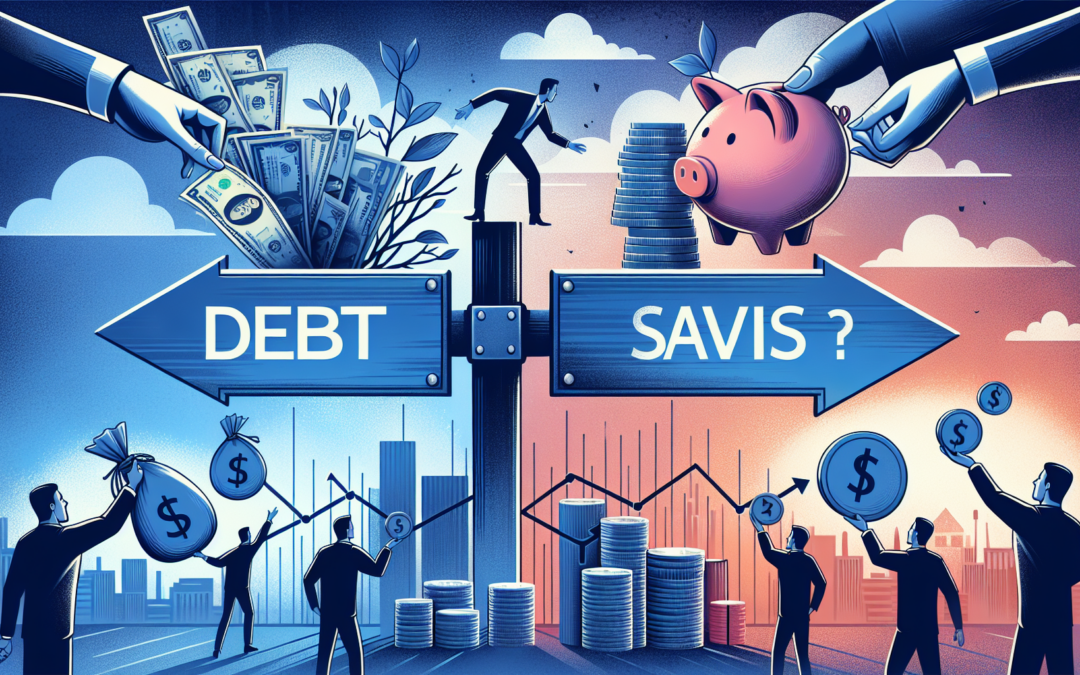
Pay Off Debt or Save?
I hope you read last month’s article from Bill Bonner with an open mind. The stock market has gone up significantly since the election. It’s going to become easier and easier to want to begin investing heavily in the stock market. But be very careful. The article last month was meant to be a reminder of all the little individual events that could trigger a collapse.
The market is valued for perfection right now. It’s anticipating huge tax cuts. Huge regulation cuts. Huge military spending. Huge infrastructure spending. And no entitlement reductions.
I don’t want to debate whether any of the above are good or bad. I just want you to know the market is going higher on a belief that all of this will occur. If the things above do not occur, that could trigger a sell-off. And everything above is adding to the national deficit.
It will be difficult to implement all of them because our deficit is already too large. And whatever we do implement will make us go into debt even more, which puts a collapse even more at the forefront.
And look what has occurred since then. Health care reform failed. Senate voting rules for the Supreme Court were changed. The US fired missiles at a Syrian airfield. North Korea continues to test missiles…
So many things could trigger a market sell-off.
I believe we are starting to see the signs of a top. It’s going to suck the 99% into the markets right before a collapse. Tread very carefully.
But this week we’re back to our discussion around savings. Specifically, whether you should save to invest or pay off debt…
Get Rid of Debt Before Saving, With One Exception
So far, I’ve shared articles on planning and how planning can help you save. I’ve shared why finding ways to save today can make a huge impact on your retirement. And I’ve shared why you need to save outside your 401(k).
But I’m often asked “Should I contribute more to my 401(k) and investments or pay off my debt?” Lots of times the follow-up is “I believe I can earn a return on my 401(k) or investments that is greater than my interest rate on debt, so it makes sense to save.”
This is a difficult question for me to answer. I don’t know anyone’s specific situation. I don’t know your interest rate on the debt you have or whether the rate is fixed or variable. I don’t know your level of investment knowledge or what options for investing you have available. There’s too much about your personal situation that I don’t know, so I can’t give a blanket answer.
However, I still want to address this question. So I’m going to tell you my approach to debt.
My Opinion: Debt Is Evil
Debt is evil. I want no debt whatsoever. Debt cripples you. The thought of owing someone else money makes me cringe.
I’ve read numerous times that poor people pay interest on debt. Rich people collect interest on debt. I believe it.
It’s easy to underestimate how much money is wasted on paying interest. You may be buying something that seems to be reasonably priced. However, if you layer in the interest that you may ultimately pay for that item, it becomes expensive.
I don’t think debt should ever be used for consumption. I’ve written about this before regarding housing. I’m in a minority, but I think: If you don’t have cash to buy a house, don’t buy it. There’s no shame in renting. The financial industry in America is not full of the wealthy 1% because people are buying homes they can afford.
I correlate it to Las Vegas. Yes, you can go to Vegas and happen to win big, but the big and fancy casinos were not built because gambling is a reliable way for the players to make money.
This applies to all consumption. If you do not have the cash to buy it, don’t buy it or you will only make yourself poorer. Having things you cannot afford may allow you to experience short-term pleasure, but ultimately you are hurting your ability to gain financial freedom.
When I Use Debt
This doesn’t mean I never use debt. I do. There are two scenarios in which I use debt.
First, I use debt as leverage in order to maximize returns on investments. My rental real estate is financed with debt. And my option trading strategies are financed with debt. But the cost of this debt is considered in the expected return on the investment.
Said another way, I’m not increasing the cost of something I’m buying to consume; instead, I’m increasing the overall potential return on an investment I’m making.
That being said, even in this scenario I’m very careful about how much debt I’m using. When you use debt to increase the potential return on an investment, you also increase the potential losses of an investment. So while I do use debt in this scenario, I make sure to do my research and limit my downside opportunities because they become magnified if the investment goes bad.
The second scenario I use debt for is short-term financing. I don’t recommend this for everyone because it can become very easy for this to turn into financing consumption as opposed to short-term financing.
For instance, I have a credit card that earns cash back. There’s no annual fee. And if I pay off the entire balance at the end of the month, I incur no interest charge. I charge almost all my monthly expenses on this credit card and then pay the entire bill at the end of the month.
This allows me to have free 30-day financing on my purchases as well as to get “free” cash back.
I’m disciplined enough not to put on this credit card more than I can afford to pay off. You should make sure you are, too, before adopting this approach.
What to Do When You’re Already in Debt
I’ve been in debt before. My parents didn’t pay for my college. I paid for my bachelor’s and master’s degrees with student loans. Immediately after college, I bought a brand-new car, financed over five years. I bought a house to live in, one year after graduating from college. I used credit cards to furnish the house and pay for vacations.
Next thing I knew, I was in massive debt. I wanted to begin saving money and investing, but I had these huge payments for all this debt each month.
I debated back and forth the same questions that I’ve been asked. If I’m confident I can return more than my interest rate on my investments, doesn’t it make sense to invest money and not focus on paying off my debt?
I get why this thought may make sense. And it’s tough for me to argue against it, but I’m going to for a couple of reasons.
First, I don’t think you should ever assume your investments will perform better than the interest on your debt does. The interest on your debt is fixed – not going down. The return on your investments in speculative.
I’m confident in my ability to earn high returns over the long term, but I’m even more confident that the interest rate on my debt is never going down. I spend an extensive amount of time researching how to maximize investment returns over the long term. And I hope all my research is benefiting and helping you in your ability to do the same.
This gives me the confidence to earn good investment returns over the long term. But no matter how much time I spend researching, there is always the risk of a negative return on my investments.
On the flip side, there is basically a 0% chance that your interest rate on debt will go negative.
Next, I believe there is something to be gained mentally by not having debt. This is conceptual, so please bear with me if I’m not explaining clearly.
When I see my investment portfolio slowly going up at a few percent per year, it doesn’t get me overly excited. When I see my debt balance slowly going down a little each year, it depresses me.
When I see my investment portfolio not going up at all because I’m adding no money, it doesn’t depress me that much. But when I see my debt balance going down substantially, it’s invigorating!
Then once your debt balance is zero and the funds that were going to pay down debt begin going to your investments, your investment portfolio goes up quickly, which is even more invigorating.
It makes you want to be more disciplined in your finances when you see this occurring. This alone is the main reason I chose to pay off my debt before focusing on saving money.
I felt depressed with my debt balance barely going down and my investments barely going up. But once my debt balance starting going down drastically, even though my investments were also going down since they were paying off my debt, I started getting excited.
Then as soon as I paid off my debt, I was motivated to put all those debt payments into savings for investing, which made my investment portfolio skyrocket. This has now removed depression from my financial situation and made me focused on continuing to improve it!
I’m sorry I cannot give you some analytical financial calculation answer on why paying off debt is better, but trust me on this. Once you experience no debt and investments growing quickly, you’ll see what I mean.
What about your house? If you already have a mortgage on a home you live in (consumption), should you pay that off before beginning to save money?
I have to be honest: I can’t answer this question. I can try, but you will not like my response.
Yes, you should pay off your mortgage if you really want to improve your long-term financial situation. Why is this not realistic? Because the reality is that you are probably living in a home that costs more than you can afford. And the only reason you can afford it is because you are paying for it over 30 years.
In that scenario, it is unrealistic for you to pay off your mortgage before beginning to save because you cannot afford the house you’d be trying to pay off. What you really need to do is move into a home you can afford, debt free, and begin saving.
But comments like the one above get me the most negative feedback and turn people off from listening to anything I have to say, so I’m going to leave it at that.
The One Exception
Your 401(k) contributions are an exception. If your employer is giving you a match on your 401(k), contribute whatever percentage your employer is matching. Taking free money from your employer outweighs paying off your debt in most scenarios.
The free money plus the investment returns should substantially outweigh your interest rates.
If all your debt is in high-interest credit cards, then you may need to ignore this.
In summary, you need to save money. However, if you’re already in debt, saving money still needs to be done – it just goes from taking you from negative back to zero (i.e., paying off your debt). Then once you get out of debt, you’ll be motivated and the saving will continue and even accelerate.
Remember, I’ve quoted research before that states there’s likely a 0% chance of a balanced portfolio (60% stocks/40% bonds) earning a 5% return over the next 10 years. So why not just protect your portfolio, pay off your debt, and save so you’re positioned to take advantage of the cheap assets as they become available? Let Your Asset Allocation Build.
To your health, wealth, and personal freedom.
Chad A. Walker, CPA, MBA