
The most expensive sentence in crypto during 2025 was four words long: “the cycle is dead.”
Fidelity Digital Assets published research literally titled “Is Bitcoin’s Four-Year Cycle Over?” The ETF-era argument ran everywhere: institutional flows had smoothed out the old rhythm, treasury companies had created permanent bid, and the halving no longer mattered. Coinbase’s CEO weighed in on the debate. An entire sector of “up only” treasury vehicles was built on the premise. (Sources linked in the footer.)
Then Bitcoin topped around $125,000 in October 2025, about eighteen months after the halving — inside the same 12-to-18-month post-halving window as every prior cycle — and fell roughly 50%. On schedule. The obituary aged worse than the patient.
What the cycle actually is
Strip the mysticism out and the four-year cycle is three interlocking rhythms:
First, the supply rhythm. Every four years the halving cuts new Bitcoin issuance in half. Whatever you believe about efficient markets, the three completed cycles since 2012 each produced a major top roughly 12–18 months after a halving, followed by a drawdown year, followed by a basing year.
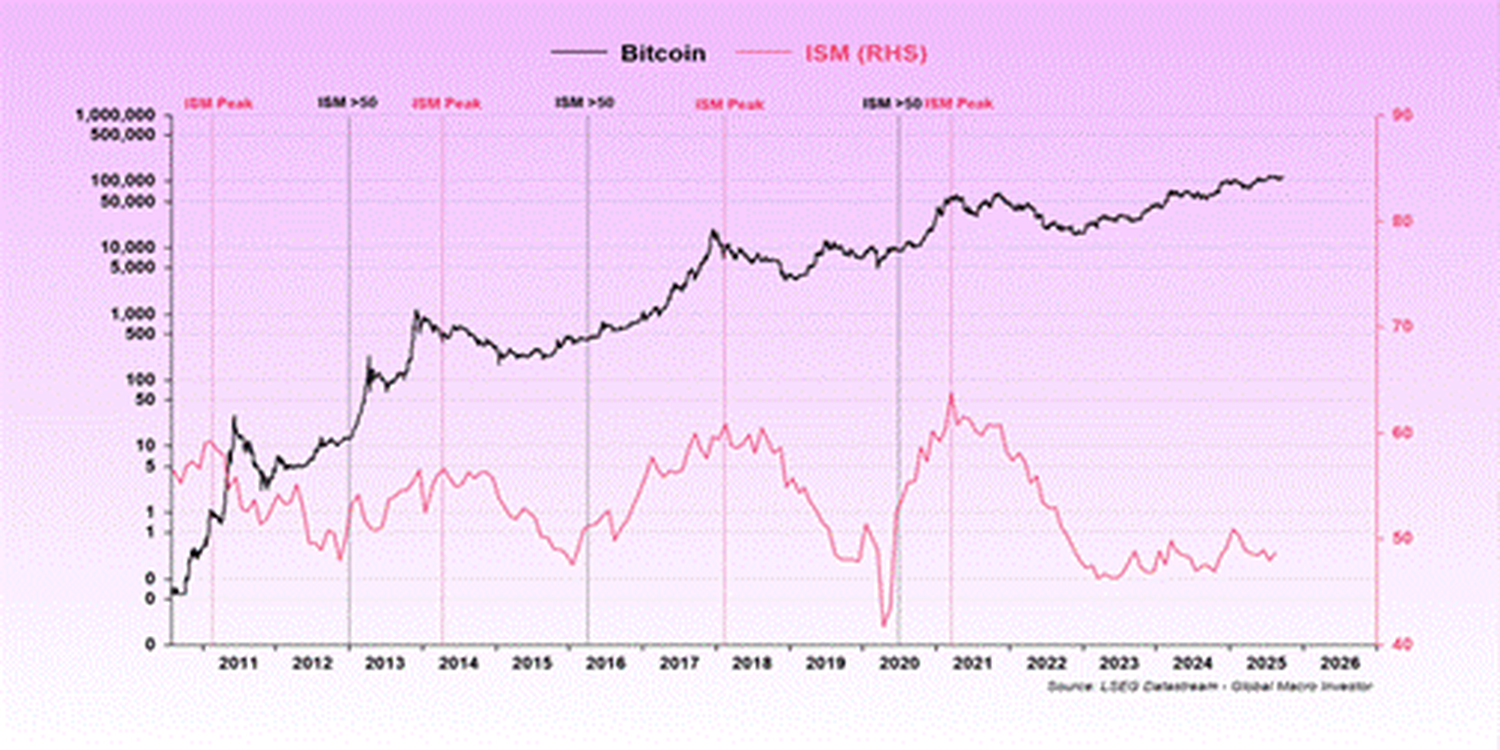
Second, the liquidity rhythm. Bitcoin doesn’t trade CPI prints; it trades liquidity. The cycle’s tops and bottoms have tracked the broader ebb and flow of global liquidity and the ISM’s multi-year wave. In every prior cycle — 2011, 2013, 2017, 2021 — Bitcoin’s major top arrived with the ISM at or near 60.
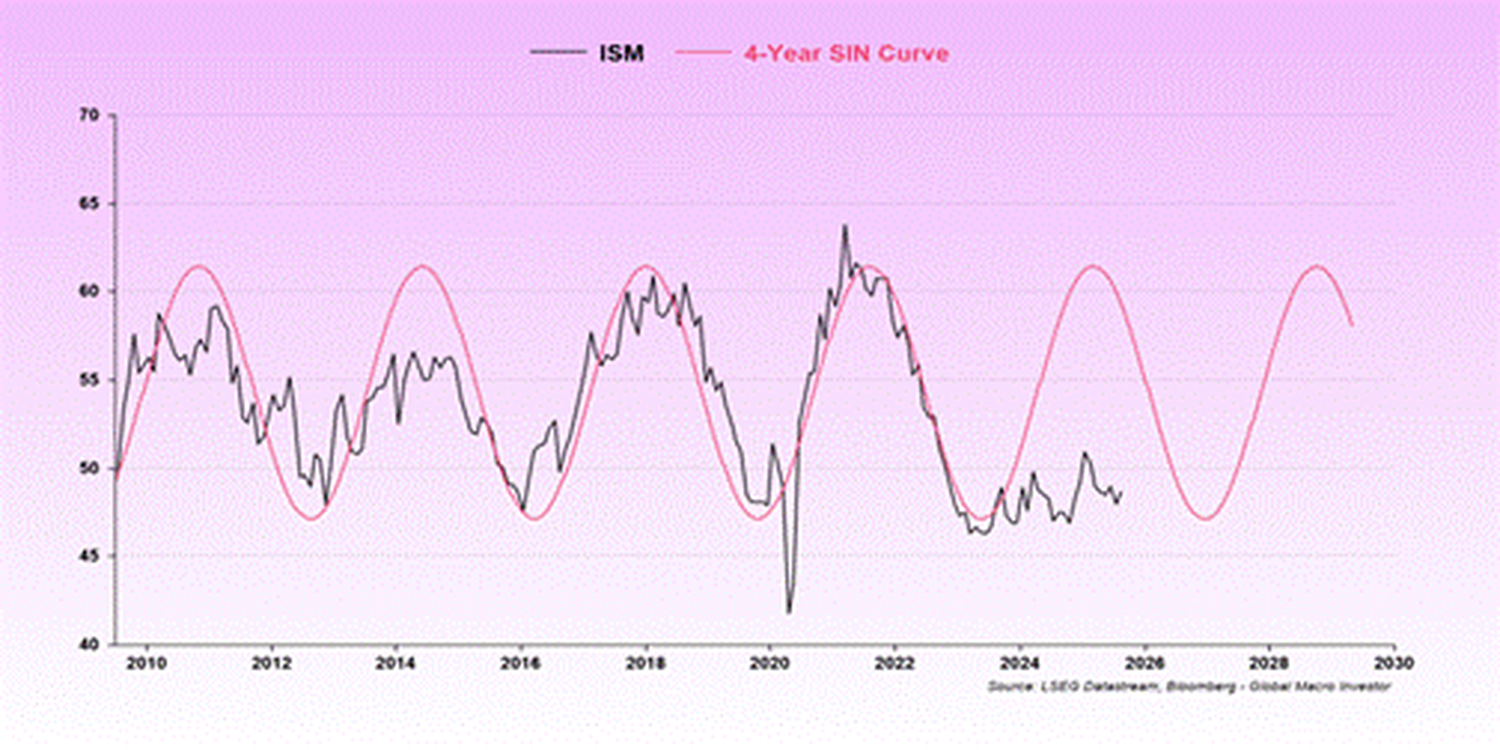
Third, the human rhythm. Accumulation, awareness, mania, distribution, despair. The same five-phase emotional sequence, every cycle, because the participants are running the same firmware. W.D. Gann was writing about that sequence a century before Bitcoin existed.
Why the “cycle is dead” crowd got it wrong — and what it cost their readers
The ETF argument confused who was buying with why markets cycle. Institutions didn’t repeal human nature or the liquidity tide; they just bought tickets to the same show. The bill for believing otherwise came fast: Bitcoin treasury companies lost roughly $80 billion in thirteen months, 43 of the 50 largest now trade below their first Bitcoin purchase, and the sector’s loudest “never sell” voice executed his company’s first-ever sale. (Sources linked in the footer.) Cycle literacy — knowing that the year after a cycle top has historically been a drawdown year — is the one warning those shareholders never got from a price target.
The honest complication: this cycle rhymes, it doesn’t repeat
Here’s where I’ll break with the pure calendar purists, because my own scorecard forces me to. The dates in my December 2023 sequence kept landing — Feb 6, 2024; Oct 8, 2024; Jun 10, 2025; the October 2025 top window — but the price behavior around several dates inverted versus the prior cycle. Prior lows became highs. Prior highs became lows. My February 10, 2026 date, drafted in 2023 as “the top is in,” is a live example: I published a bottom call for that date instead — the low zone registered, but the V-bottom didn’t come, and it’s graded a miss on my scorecard. The date mattered; my script for it was wrong. This cycle is rhyming with history while refusing to trace it. That distinction — window versus script — is the difference between using the calendar and being used by it. (The full call-by-call record, including both February 2026 misses, is in my scorecard post.)
The window ahead: October 2026
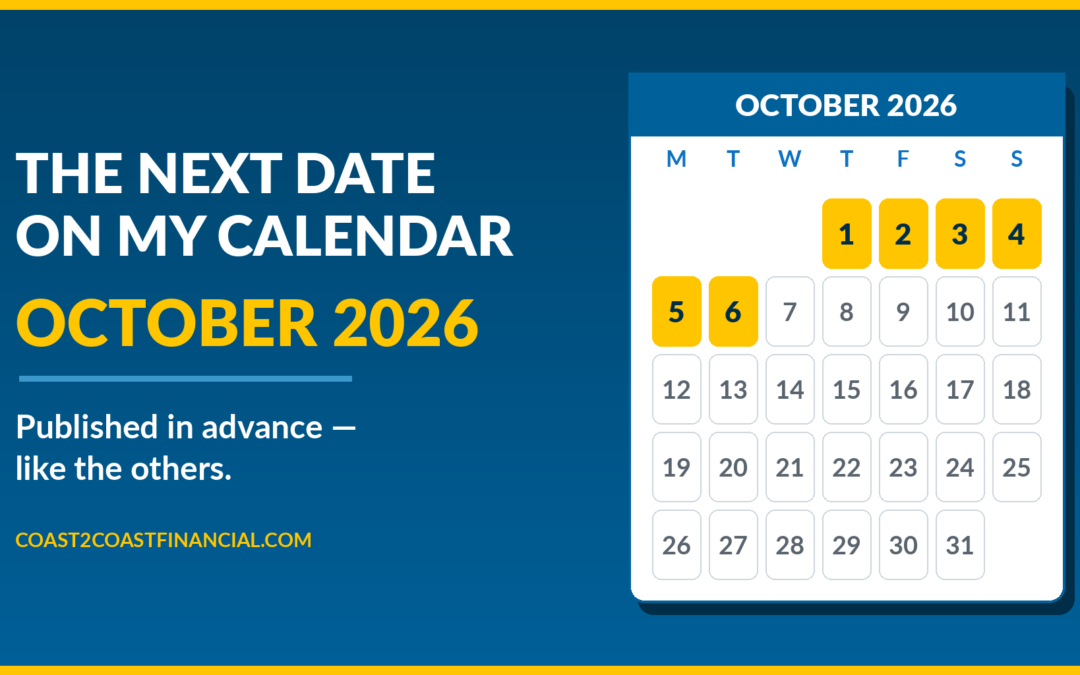
The historical pattern is public math: the three prior cycles bottomed in the post-peak year — 2014, 2018, 2022 — and each of those lows printed in the October–December window. My own next pre-registered date sits in that window: October 2026, published in advance like every other date on my ledger — it’s in Chapter 7 of the book and in the scorecard post.
Read that carefully, because the framing matters. That is not “Bitcoin will bottom in October.” It’s: here is a dated, falsifiable window, published beforehand, that history says to watch — and whatever happens, it gets graded on the scorecard like everything else. If the window delivers, the cycle survives its own funeral twice in twelve months. If it doesn’t, you’ll read exactly what I got wrong, here, with the original post still up.
That’s the entire method of my new book, Accelerate Your Money and Prosper: The Bitcoin Cycles the Financial Industry Won’t Tell You About — 145 pages and 20 charts teaching you to ask “where am I in the cycle?” instead of “how high can it go?” The next window opens in October. Get the framework before the date, not after: https://www.amazon.com/dp/B0HHNHFCTW.
Sources: Fidelity Digital Assets, “Is Bitcoin’s Four-Year Cycle Over?”; The Crypto Times, Aug 27, 2026 (treasury-company losses); CoinDesk, Jun 27, 2026 (mNAV below 1.0).
This is educational, not investment advice. I’m a CPA, not your CPA, and not your investment advisor. Disclosure: I personally own Bitcoin and gold, as documented throughout my books and reports.